
New Opportunities in Japanese Real Estate Investment: MUFG Launches a $680 Million Fund—How High-Net-Worth Families Can Seize Japan’s Golden Window for Property Acquisition
A New Era for Japanese Real Estate Funds
A major piece of news has recently emerged from Japan’s financial sector: Mitsubishi UFJ Financial Group (MUFG), Japan’s largest banking group, has officially launched a Japanese real estate fund with a scale of $680 million. As advisors who have long followed Japan’s investment market, we see the deeper significance behind this move: major international financial institutions are optimistic about the outlook for Japan’s real estate market, drawing the attention of global capital.
For high-net-worth families in Taiwan and Chinese investors based in the United States, this is more than just news—it is an important signal that Japan’s real estate market is entering a new stage of development. Many clients ask us, “Is it still in time to enter the Japanese property market?” My answer is: the timing is just right. Allow me to provide a detailed analysis of the investment rationale behind this.
Why Are Major Financial Institutions Bullish on Japanese Real Estate Now?
MUFG’s decision to invest $680 million to establish a real estate fund was not made lightly. Several key factors are driving it:
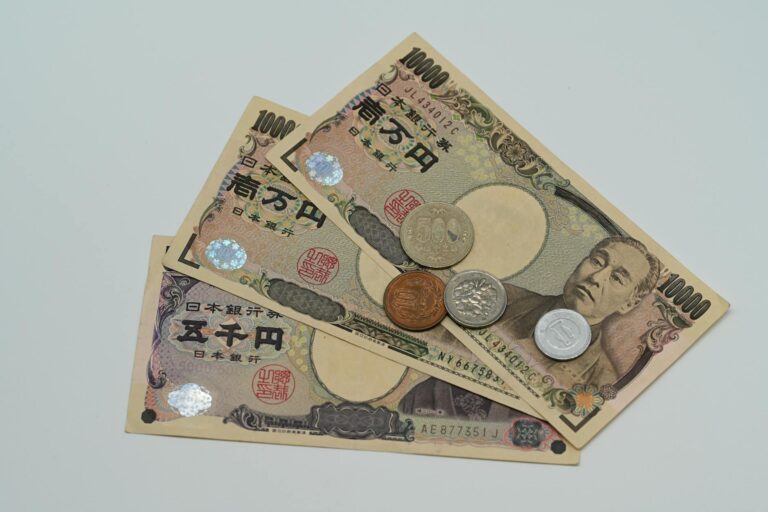
- Investment opportunities created by a weaker yen: In recent years, the yen has depreciated, which has effectively lowered the cost for overseas investors to purchase Japanese property using U.S. dollars or New Taiwan dollars. This is particularly advantageous for Taiwanese families—your purchasing power has effectively increased.
- Stability of core assets in Tokyo and Osaka: Japan’s real estate market has recovered from the bubble era, and high-quality properties in Tokyo and Osaka have demonstrated strong long-term value preservation. Unlike some emerging markets with sharp volatility, Japanese property is more like the “anchor” of an asset allocation portfolio.
- Attractive rental yields: Especially in Tokyo and Osaka’s commercial districts and top school zones, stable rental returns are highly appealing to investors seeking cash flow. Among our clients, many use rental income from Japanese properties to supplement retirement funds or children’s education funds.
- Policy support from the Japanese government: In recent years, the Japanese government has been working to invigorate the real estate market and has become more open to foreign capital, creating a more investor-friendly environment for international investors.
Tokyo and Osaka: Two Completely Different Investment Styles
Many first-time investors in Japanese property ask, “Between Tokyo and Osaka, which should I choose?” In our experience, the answer depends on your investment objectives.
Tokyo is Japan’s economic heart. Properties here have greater potential for appreciation, especially in prime commercial areas such as Shibuya, Shinjuku, and Minato City. If your priority is long-term capital appreciation, Tokyo is the top choice. At the same time, Tokyo has the largest population of international students. If you are considering a “property-for-education” plan for your children (i.e., purchasing a school-zone home or student apartment to provide housing while also generating rental income), there are many opportunities around Tokyo’s university districts.
Osaka
We recommend that high-net-worth families consider a “dual-city allocation”—holding properties with strong appreciation potential in Tokyo, while allocating properties with higher rental yields in Osaka. This approach allows you to benefit from appreciation while maintaining stable cash flow.
Yen Exchange-Rate Volatility: Threat or Opportunity?
When it comes to investing in Japanese property, the first concern for many people is exchange-rate risk. “With the yen fluctuating so much, will it affect my investment returns?”
Let me reframe the question. For overseas investors, a weaker yen does reduce purchase costs in the short term—which is good news. Over the long term, yen volatility does exist, but for tangible assets such as real estate, exchange-rate risk can be hedged through rental income. You can choose to convert your yen-denominated rental income into New Taiwan dollars or U.S. dollars on a regular basis, thereby smoothing the impact of exchange-rate fluctuations.
More importantly, the value of Japanese property itself is denominated in yen. When you hold property in Tokyo or Osaka, you are effectively holding the asset class of Japanese real estate—not “betting on yen appreciation.” Property appreciation and rental income are the true sources of your returns.
What MUFG’s Fund Launch Signals for Investors
The rationale behind a major financial institution like MUFG establishing a real estate fund is clear: they are optimistic about the medium-term outlook for Japan’s real estate market. What insights does this offer individual investors?
- Market confidence is recovering: Inflows of institutional capital often signal a market turning point. MUFG’s move indicates that professional institutions are increasing their allocation to Japanese real estate.
- A relatively favorable entry window: The period around the launch of a large fund is often a good time for individual investors to enter. You can ride the “tailwind” of institutional capital inflows.
- Diversification is becoming the trend: More and more high-net-worth families are incorporating Japanese property into their global asset allocation. If you do not yet hold Japanese property, now is an excellent time to complete that piece of the puzzle.
Different Considerations for Taiwanese Families and U.S.-Based Chinese Investors
Among our clients, Taiwanese families and Chinese investors based in the United States tend to focus on different aspects of Japanese property investment.
For high-net-worth Taiwanese families: Japanese property is an important component of cross-border asset allocation. Beyond investment returns, many families also consider providing stable housing options for children studying abroad. Purchasing a school-zone home in Tokyo or Osaka can give a child a stable place to live while also generating rental income after graduation—an “all-in-one” strategy. In addition, Japan’s tax system is relatively transparent, and for families with cross-border tax planning needs, the tax treatment of Japanese property is comparatively straightforward.
For U.S.-based Chinese investors: Japanese property can serve as a complement to a U.S. real estate portfolio. Many Chinese investors in the U.S. already hold properties in places such as Phoenix and Texas and are now considering international diversification. Adding Japanese property can reduce single-country market risk, while yen-denominated assets can also hedge U.S. dollar exposure. Moreover, if you are planning for retirement, rental income from Japanese property can serve as an additional source of retirement cash flow.
Cross-Border Tax Planning: A Critical Component You Cannot Ignore
When purchasing property in Japan, tax planning must be handled with great care. Many investors fail to fully consider tax implications before buying and end up incurring unnecessary costs later.
Based on our experience, the main taxes involved in Japanese property include:
- Acquisition tax: Purchasing property in Japan requires payment of an acquisition tax, which is a one-time cost.
- Holding tax: Property tax must be paid annually.
- Rental income tax: If you rent out the property, rental income is taxable.
- Capital gains tax upon sale: When you sell the property, the appreciation portion is subject to income tax.
For Taiwanese residents, this also involves provisions under the Taiwan–Japan tax treaty. For U.S.-based Chinese investors, you must consider U.S. taxation rules on overseas property income, as well as regulations such as FIRPTA (the Foreign Investment in Real Property Tax Act). All of these require thorough planning before purchase to maximize your after-tax returns.
We strongly recommend consulting a professional cross-border tax advisor before deciding to purchase Japanese property and developing a detailed tax planning plan. The cost of doing so is far lower than the cost of fixing issues after the fact.
Practical Guidance: How to Begin Your Japanese Property Investment Journey
If you are interested in Japanese property now, we recommend the following steps:
- Step 1: Clarify your investment objectives. Are you seeking appreciation or cash flow? Is it for owner-occupancy or investment? Is it for your children’s study-abroad plans or purely for asset allocation? Different objectives lead to different property choices.
- Step 2: Choose the right city and area. Tokyo and Osaka each have their strengths—choose based on your goals. Even within the same city, investment characteristics can vary significantly by neighborhood.
- Step 3: Conduct tax planning. Before purchasing, be sure to communicate with professional advisors and develop a tax plan that fits your situation.
- Step 4: Select reliable local partners. Japan’s real estate market has its own unique rules and culture, and an experienced local team is essential to support you.
- Step 5: Hold and manage for the long term. Real estate investing is not a short-term game. Be patient and continuously optimize your portfolio.
Conclusion: Japan’s Golden Window for Real Estate Investment Has Begun
MUFG’s launch of a $680 million real estate fund is not merely a financial event—it is a signal that Japan’s real estate market is entering a new phase. For high-net-worth families seeking global asset allocation, this is an opportunity worth serious consideration.
Whether you are a family in Taiwan or a U.S.-based Chinese investor, Japanese property can become an important part of your cross-border wealth planning. The key is to do your homework, develop a clear investment strategy, and work with a professional team.
Would you like to learn more about a Japanese property investment solution tailored to you, or discuss how to incorporate Japanese property into your global asset allocation plan? Our team has in-depth research on the Tokyo and Osaka markets and is also well-versed in cross-border tax and asset planning. You are welcome to book a one-on-one consultation, and we will tailor an exclusive investment strategy for you.